|
|
This Week's Round-Up: September 21, 2026 |
|
|
|
|
Maybe Canada Is for Sale
Carney pitches investors on airports and EU on resources
|
|
Last week, Prime Minister Mark Carney held an investment summit in downtown Toronto, bringing in billionaires and their representatives and announcing plans to semi-privatize Canada’s four biggest airports as part of the offerings.
Carney argued that investor-operators could “unlock their true value,” and improve and cheapen the airports but didn’t explain how. The strategic logic here is unclear, University of Ottawa professor Patrick Lebold told The Walrus, “other than responding to what investors want in terms of more investible assets to make decent returns.”
|
| Read or Listen to the Story |
|
By its end, the summit garnered a half-trillion dollars in investment commitments—and no small amount of consternation from the public. Airport privatization drew support from less than one-third of respondents in summer polling, and many attending investors were not only Americans and billionaires but, in some cases, actual affiliates of Trump or targets of criticism by the UN.
Protest signs at a summit event contended that “Selling Canada to Billionaires is NOT Nation Building.”
Carney seems to have another idea for how to build away from the US: “an alliance strong enough so that no one can dictate our choices.”
The Sales Associate
The day after the summit, it emerged that the European Union had offered Canada a vaguely defined relationship called “associate membership” (a path to full membership presumably hit the slight snag of Canada not being in Europe).
In a speech, Carney framed the partnership as one of chosen “affinity” rather than inherent geography—and quickly moved into pitching Europeans on Canada’s minerals, LNG, hydrogen, and more.
Carney also used the address to flag the risks of losing sovereignty not only to the US but to some of its biggest companies. Tech is altering nations’ warfare, economies, and governance, he said. Its big platforms “aspire to sovereignty” and want to set or evade regulation, “control our data, spread misinformation, and steal our children’s childhoods.”
But it’s hard to square the PM’s warnings—and his calls for domestic control over AI and other digital infrastructure and utilities—with the week’s efforts to sell infrastructure to some of the most powerful and notorious American investors. And, as Vass Bednar writes, Canada barely exercises its current powers to limit foreign control of tech, allowing multiple recent sales of Canadian AI companies to bigger US ones.
But Europe has made strides toward divesting from these US platforms and going domestic or at least regional—and closer ties could bring Canada more options on that front.
A garden doesn't grow in a day, and the speech’s references to trees grown from Vimy Ridge acorns indicate more and more that Carney is looking at growing closer over the next decade-plus than at executing a full lineup change mid-play.
Do you think a formal EU partnership will benefit Canada? Reply to this email to tell us how (or why not)?
|
| Read or Listen to the Story |
The Anti-Brexit
A decade after the UK voted to separate, the top central banker of that time gets a chance to join the EU rather than leave—and another crack at preventing a separatist split.
Carney’s Bank of England tenure exactly overlapped the time from the Brexit referendum’s 2013 announcement to its 2020 final deal. He became a player in that drama, after flagging a departure as the UK’s “biggest domestic risk to financial stability,” winning the ire of pro-Leave MPs.
But a decade on, many UK voters seem to wish they had listened; per a June poll, 66% of Leave voters now want closer relations with the EU.
But the one who actually gets not only a chance to join the EU, but also a do-over of a separation referendum, is Carney. The PM has directly compared this year’s Alberta ballot to Brexit, cautioning that Leavers’ promises of better negotiating leverage have backfired over the decade since. Arno Kopecky writes that the shadow of Brexit, and his place in it, has shaped Carney’s appeasing approach to Alberta.
In May, Premier Danielle Smith boasted that Carney had “adopted most of Alberta’s positions on energy and resource development,” from an end to production caps, energy regulations, and carbon taxes to a promised new pipeline through BC.
Kopecky suggests that the real risk here may not be actually losing parts of the country but what the country loses in the process of staying together.
Kopecky fears it could be the climate. Adam Gordon fears it could be our entire identity (and a handful of our rights).
Carney, for his part, has framed overtures to global business as the fuel for Canadian ideals rather than a sacrifice of them. He told the EU audience that Canadians, like them, “believe that a strong economy is not an end in itself but the means to a just society.”
But in a story on Carney’s conservatism—and his popularity—Stewart Prest disputes the premise that these environmental and political concessions will actually gain anything. Justin Trudeau already burned bridges and dollars to bring Alberta a pipeline, yet made no dent in its antipathy toward him or Ottawa. And in an increasingly carbon-skeptical global market, a pipeline may not actually be able to sell all that it can ship.
|
| Read or Listen to the Story |
The Disaster Artist
If appeasements can’t reliably appease, what is their purpose? After last week, an increasingly common answer is that Carney is not a Brexit-scarred former climate champion reluctantly making concessions to regional interests, but a former central banker happily making arrangements for multinational interests.
Amid last Tuesday’s airport reactions, Naomi Klein was among voices arguing Canada is being subjected to her own concepts of “shock doctrine” and “disaster capitalism.” Under this framework, large disasters or disruptions (in this case, Trump’s attacks on Canada’s trade and sovereignty) are exploited to usher in neoliberal reforms such as deregulation and privatization, to the benefit of global capital and typically the US.
It’s a framework that has been applied to both Trump’s original rise and his current reign, and to the UK government’s raft of business-friendly proposals in the wake of the Brexit vote (not all of which came to pass).
Shock doctrine’s christener now argues her opponent-in-law Carney is as guilty of it as his own most famous opponents.
The Dismantler-in-Chief
The mild-mannered economist bears little direct resemblance to the boorish Trump or the stereotypical “gammons” of Brexit. But Linda Thornback argues this is key to Carney’s strategic advantage: he takes Conservatives’ rallying points and makes them practical business rather than cultural crusades. He has, for now and maybe for good, neutralized the once-ascendant Pierre Poilievre by delivering many of his anti-Trudeau policies without the “exhausting atmosphere of grievance and retaliation.”
Those policies’ rebrand has widened their appeal. The Liberals have siphoned vote share and approval numbers from the CPC, while retaining voters who are more reassured to see Canada’s leader doing something than they are concerned about what it is. This month, Carney was just as often praised as a pragmatic “adult in the room” as he was criticized as a Thatcherite fox in the henhouse.
Thornback writes that Carney is not a disruptor like Poilievre or a destabilizer like Trump but a dismantler, quietly and professionally breaking down and/or reshaping institutions. In this framework, he does not so much smuggle extreme changes past a shocked and distracted public as walk them calmly out in front of a public primed to believe him.
But as Frank Abagnale Jr. (the subject of Catch Me if You Can and one of the last great confidence men) famously showed, distraction and normalization can go hand in hand—especially when it comes to airports.
As Olivia Bowden reports, Carney himself alluded to disaster changing the political possibilities on airport privatization—which Trudeau explored but avoided in 2017 after substantial backlash. “We are living in different times,” Carney said, and building Canada in a more “dangerous, divided,” and “hostile” world.
|
| Read or Listen to the Story |
|
Carney seems to see that danger and division as not only a social crisis but also a business opportunity.
But the question has begun to loom larger and larger: In these opportunities, is the Canadian public the stockholders who stand to benefit … or the product being offered?
|
|
|
|
Thank you for reading,
—Cameron Welch,
Audience Editor, The Walrus |
|
|
 |
|
The Walrus Talks North of Now brings together seven community leaders, researchers, policy makers, and industry professionals to explore bold, northern-led visions for economic growth, sustainability, and reconciliation. From advancing infrastructure and economic diversification to strengthening environmental stewardship alongside Indigenous Nations and communities, the conversations will examine both the challenges and emerging opportunities impacting the region’s future. |
| Join Us on November 17 |
|
|
|
|
|
|
|
|
|
|
|
FROM THE WALRUS LAB IN PARTNERSHIP WITH THE AGA KHAN MUSEUM. THE MUSEUM WISHES TO THANK NADIR AND SHABIN MOHAMED FOR THEIR FOUNDING SUPPORT OF THIS BEING HUMAN. |
 |
|
Where Art and Faith Meet |
|
What ties an 8th-century mosaic in the Dome of the Rock to a contemporary abstract carpet? Islamic art historian Christiane Gruber explores the question through the contradictions, interpretations, and evolving traditions that define Islamic art.
In this episode of This Being Human, Gruber discusses the political meanings of sacred ornament, depictions of the Prophet Muhammad, and her latest research into eco-Islamic art and the significance of stewardship and sacred water.
|
| Listen |
|
|
|
|
|
|
|
|
|
|
|
|
|
|
 |
|
Luddites Unite
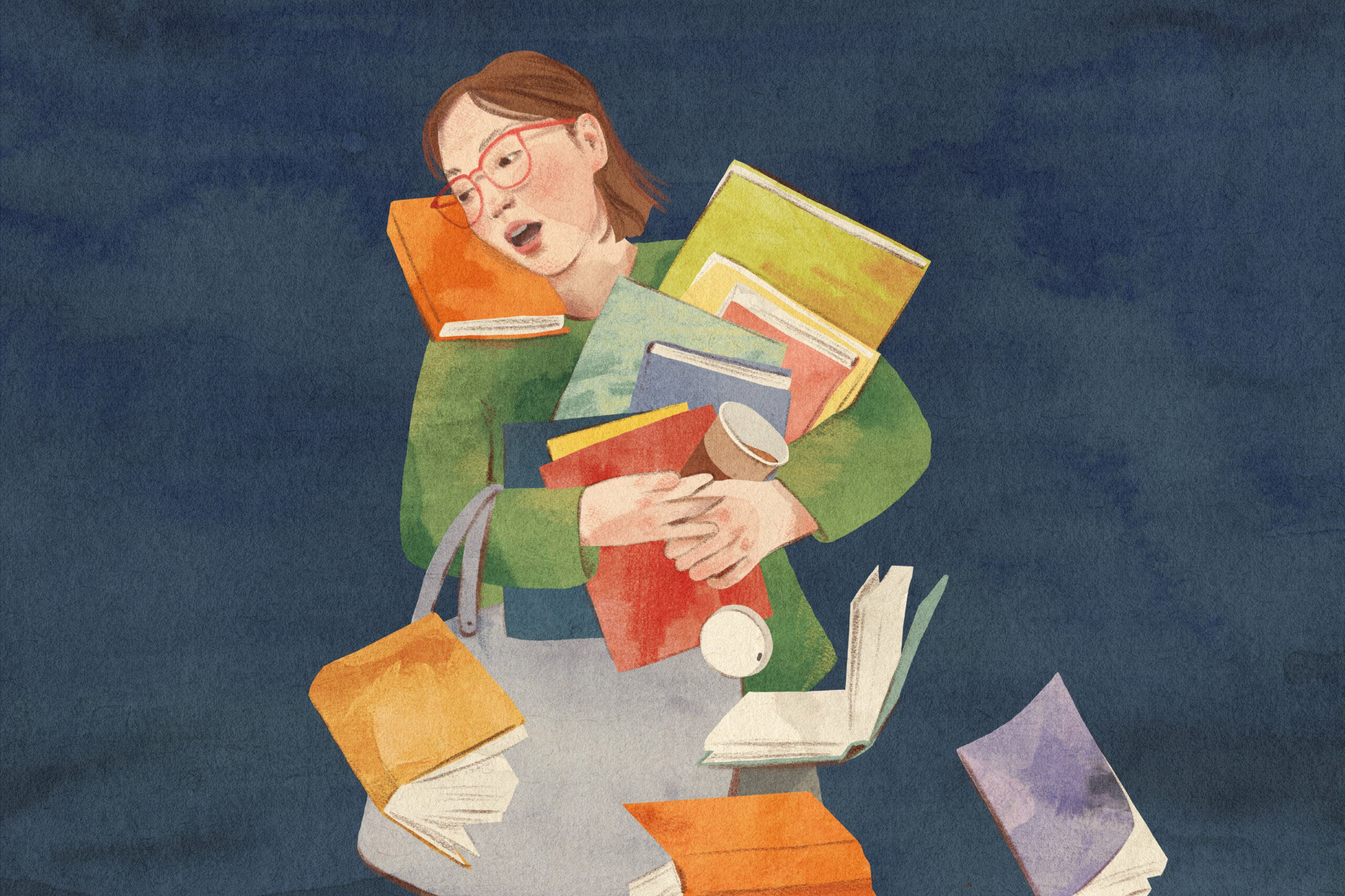
I support the concerns about artificial intelligence raised in Carmine Starnino’s excellent Editor’s Letter and in “My Perfect Friend” (June), Thea Lim’s smart, insightful essay on her failed attempts to befriend companion chatbots—which 52 percent of American teenagers reportedly use on a regular basis. These essays were especially timely in light of the federal government’s June unveiling of its “strategy” on AI, particularly its focus on promoting the adoption of this technology while narrowly confining its concerns to privacy, online safety, and maintaining democracy. The government leaves unexamined the larger common-good and public-health concerns around the loss and degradation of jobs, and also how addiction is built into the design and algorithmic logic of AI systems. I was part of the discourse on technological change in the 1980s and ’90s, speaking at conferences organized by government departments, unions and professional groups (like the Canadian Library Association), and even by the federal government under Pierre Elliott Trudeau, in 1983. I was often described as a Luddite. But true to Ned Ludd and his nineteenth-century followers, I was simply advocating for public-good regulation of technology (then, industrial-scale looms) and public-interest limits on its use. Now, as then, we need an informed, critical public discussion of both the benefits and dangers of AI—a technology that Geoffrey Hinton, the so-called godfather of AI, has warned cannot replicate human intelligence so much as manipulate it, or maybe even replace it.
Heather Menzies
Gabriola, BC
|
| Read More |
|
|
|
|
|
|